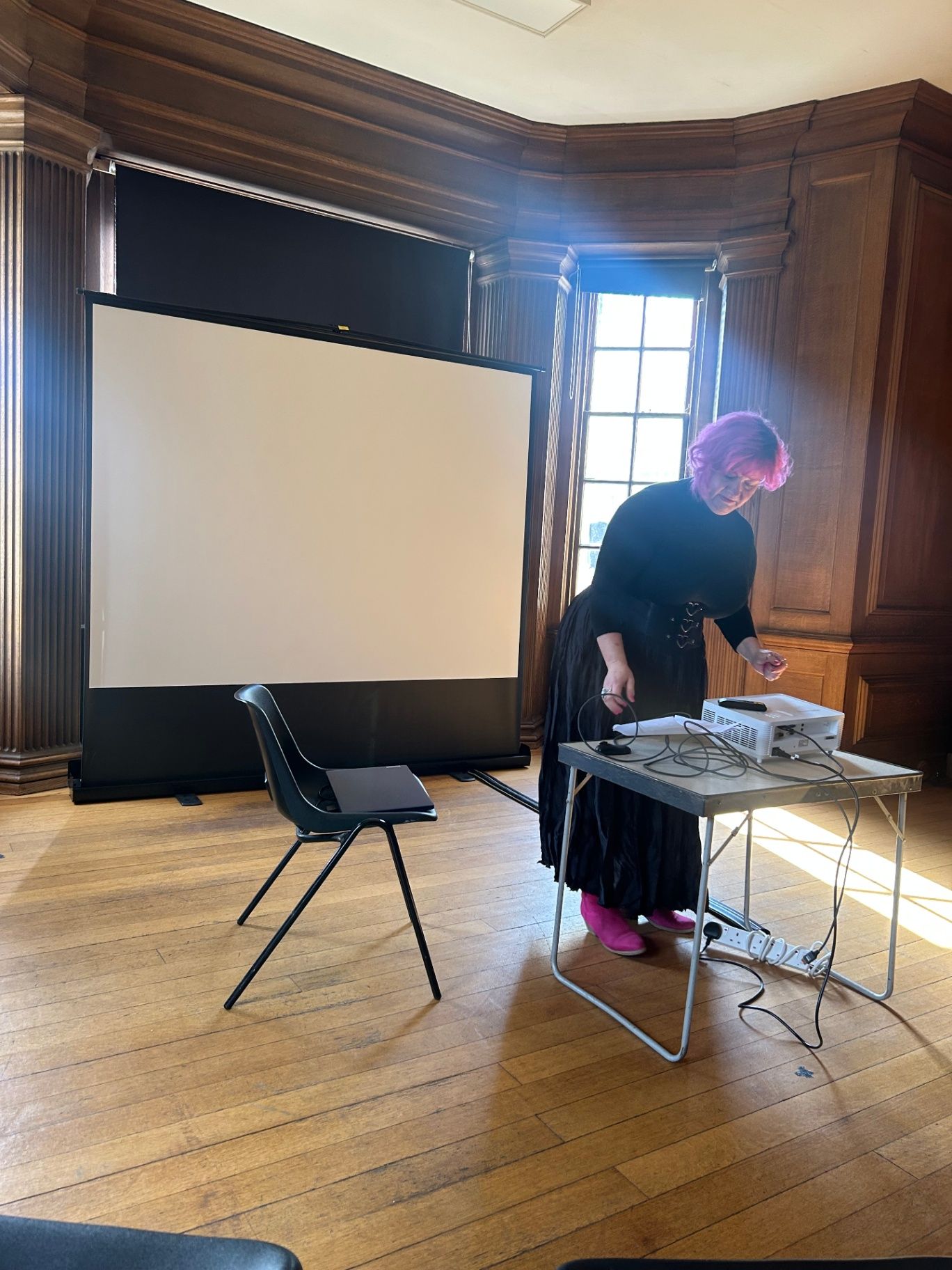
Before I became a professional speaker, I was already doing facilitation work. I was comfortable bringing people together, guiding discussions and helping groups explore ideas. Even so, calling myself a speaker felt like a very different step.
Several doubts were running underneath my decisions:
“I’m not good enough.”
“What if I fail?”
“It has to be perfect.”
But the sentence that felt strongest for me was: “What if I’m not as good as I think I am?”
I had experience facilitating groups, but that did not automatically mean I believed I could build a speaking business. There was a difference between being told I had something to offer and having enough evidence, support and experience to begin believing it myself.
That is why I have been thinking about the place of encouragement in building women’s confidence at work. Encouragement matters. Being told that someone believes in you can be meaningful, especially at a moment when you are unsure of yourself. But encouragement alone does not always change the beliefs sitting underneath it.
Someone can tell you that you are capable. They can encourage you to apply for an opportunity, reassure you that you are doing well or say that they can see you succeeding. You may appreciate every word and still hear a quieter sentence in your own mind saying, “I’m not good enough.”
I know this because I have experienced two very different versions of encouragement.
When encouragement does not feel genuine
Some time ago, I attended an introductory day run by a large coaching company. I enjoyed the day and initially signed up for a programme about growing a coaching business. During the event, a speaker from the company told me that I would make a really good speaker.
That encouragement stayed with me and contributed to my decision to enrol on the company’s speaker programme later that year.
The coaching programme was mostly very good, although the second day included a strong sales pitch for mentoring. The speaker programme was different from what I had expected. Of the three days, only one was really focused on speaking. Much of the content centred on selling from the stage, alongside encouragement to join the company’s property investment programme to learn more.
I declined that offer on the second day. After that, I felt that the interest in me had disappeared. It left me questioning whether the original comment about becoming a good speaker had been genuine, or whether it had simply been part of the sales process.
The company itself is not the point. What stayed with me was what the experience taught me. Telling somebody that they have potential is not enough when it is not followed by genuine interest, practical support or a real opportunity to develop.
Having your potential named is not the same as being listened to, taken seriously and supported as you learn.
What made the difference for me
The experience that made the greatest difference came later.
Jermaine was already my mentor and genuinely believed in me. The Signature Speaker Collective, led by Jermaine and Kelly, then gave me the practical support to understand what I genuinely wanted to speak about and the different ways and places in which I could speak.
I had the opportunity to develop and structure my ideas, practise alongside other aspiring speakers and learn through sharing my work. I received honest feedback, as well as practical guidance, hints and tips that helped me improve.
That support did not mean that every doubt disappeared. It gave me something much more useful: a way to test my ideas and build trust in what I was learning.
One of the biggest things I learned from Kelly was that I did not need to have a coaching business in order to become a speaker. Although I loved one-to-one coaching, I could find it personally draining. I already loved facilitation, and through the programme I realised that speaking and facilitating workshops could become the main focus of my business.
Until then, I had assumed that speaking needed to sit alongside a coaching business. Kelly helped me see that it could be a business in its own right. That gave me permission to choose the work that felt right for me, rather than trying to fit my speaking into a model I had not chosen.
This is where encouragement became more meaningful. It was not just, “You could be good at this.” It came with the chance to ask questions, try things out, receive feedback and make decisions based on what I was learning.
For some people, the sentence underneath their hesitation may be “I can’t do that.” For others, it may be “I say yes to everyone else.” Even “I’ll do it later” can become a way of keeping an opportunity at a safe distance. These sentences are not always obvious to the people around us, and we may not always say them aloud.
They are part of what I explore in The Sentences We Live By™. I am interested in the gap between what we are told about ourselves and what we have come to believe about ourselves.
Confidence grows through doing
The turning point for me was securing and delivering my first talk while I was still on the programme.
There was plenty for me to learn from that first talk. I knew there were changes I needed to make, and I did not suddenly feel that I had everything worked out. If I am honest, parts of it felt less like polished professionalism and more like learning in public with a decent outfit on. But I also received lovely feedback.
That experience helped me understand that confidence did not require me to deliver something perfectly. I could do it, learn from it and improve the next time.
That may sound simple, but it changed the way I thought about confidence. I had been waiting to feel ready enough before beginning, as if confidence might politely arrive first and save me the trouble. In reality, some confidence came from beginning, having the experience and discovering that I could respond to what I learned.
I now believe that I am a professional speaker and facilitator. I have secured five bookings, and, as Jermaine says, this stage is my apprenticeship for the life I have visualised.
I do not believe confidence arrives all at once, or that every doubt simply disappears. For me, it has grown through doing the work, receiving genuine support and tackling the uncomfortable moments head-on.
What needs to sit alongside encouragement
This is why encouragement needs to be accompanied by something real.
For women themselves, that may mean having the chance to practise, test an idea, receive useful feedback and notice what they are learning rather than judging every mistake as proof that they should stop. It may mean recognising existing strengths, even while developing new ones.
For managers, organisations and women’s networks, it means looking beyond reassurance. If someone is encouraged to apply for an opportunity, is she also given a genuine chance to do it? If she receives positive feedback, is it specific enough for her to understand what she is doing well? If something does not go perfectly, is there support to learn from it rather than a sense that she has confirmed everyone’s doubts?
It also means creating working environments where women can speak honestly about what they do not yet know, what they are finding difficult and what support would help. People are less likely to develop confidence if they feel they must appear certain before they are allowed to participate.
Belief tends to grow from something you have actually done and from people who stay interested while you are still learning.
When I think about women’s confidence at work, I do not think the answer is simply to tell women to believe in themselves more. I think it is worth asking what opportunities they are actually being given, what messages they are receiving from the people around them and whether the environment allows them to learn without having to be perfect from the start.
Perhaps the useful question is not only, “What are we telling her she can do?” It is also, “What are we giving her that helps her believe it for herself?”